Building with Earth
Hands on Building as a Therapy
8 June 2026 · 4 min read

Janani S
Architect & Researcher — Sustainability and Inclusive Urbanism
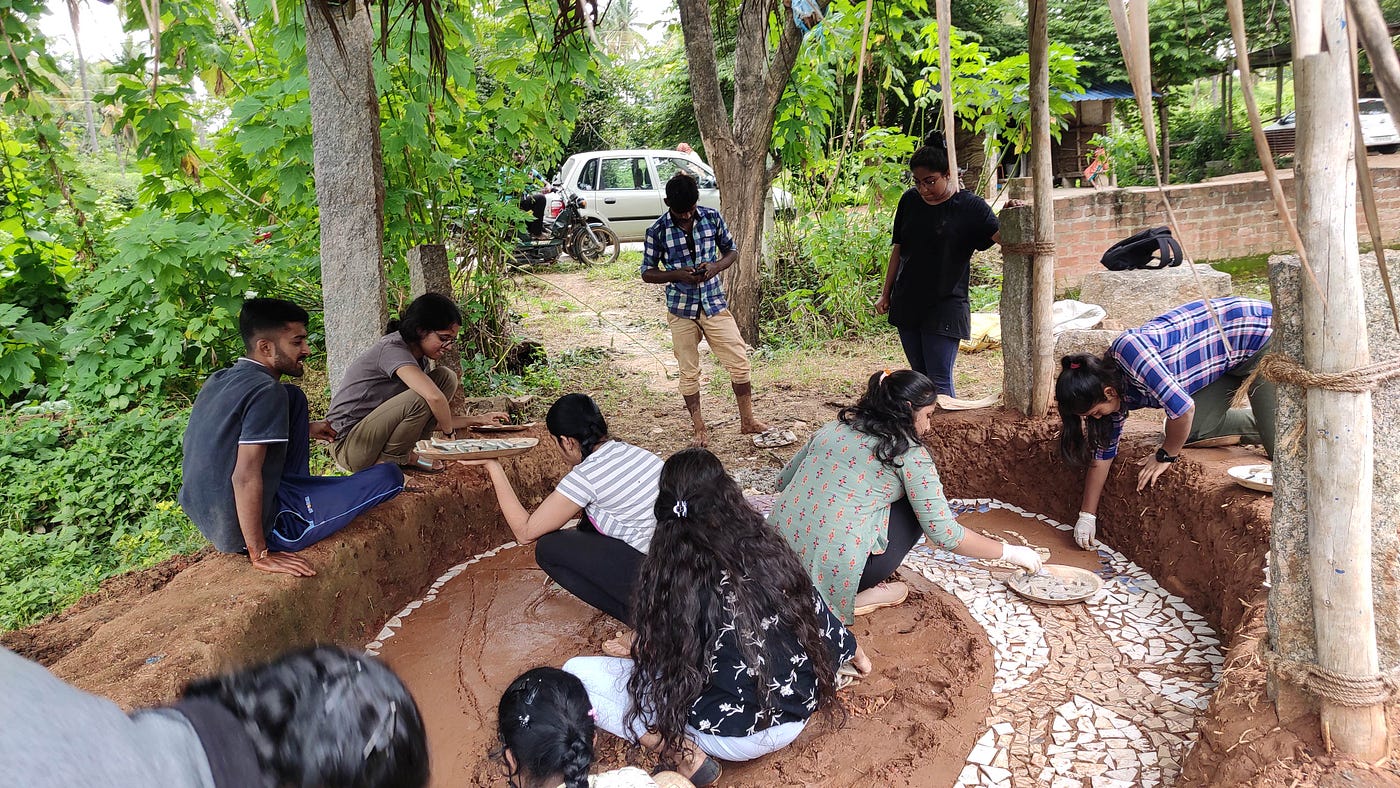
Few years ago, I chanced upon a farm and space curated by Dinesh, founder of Janastu in a village called Durgadahalli, near Tumkur. At first I visited this place only with the idea of exposing my then 3 year old to the earth and farm. What started off as a getaway at a farm became the beginning of a long relationship with the Janastu team and the village of Durgadahalli at large.
Janastu was working close with the village folks to build a wireless local network for them to share and access data. They also worked with the village women to create sustainable craft products from the dried bulrush grass grown in the nearby lakes. While our stay, Dinesh told us there was a need to create some spaces for the community there. This was very exciting and we began the process by getting deeper into the village with our feet on the ground — walking through sections of old houses, observing what is, what the people there did and how they lived. We were fed generously by the villagers with ragi-based rottis and horsegram chutney on all such visits.
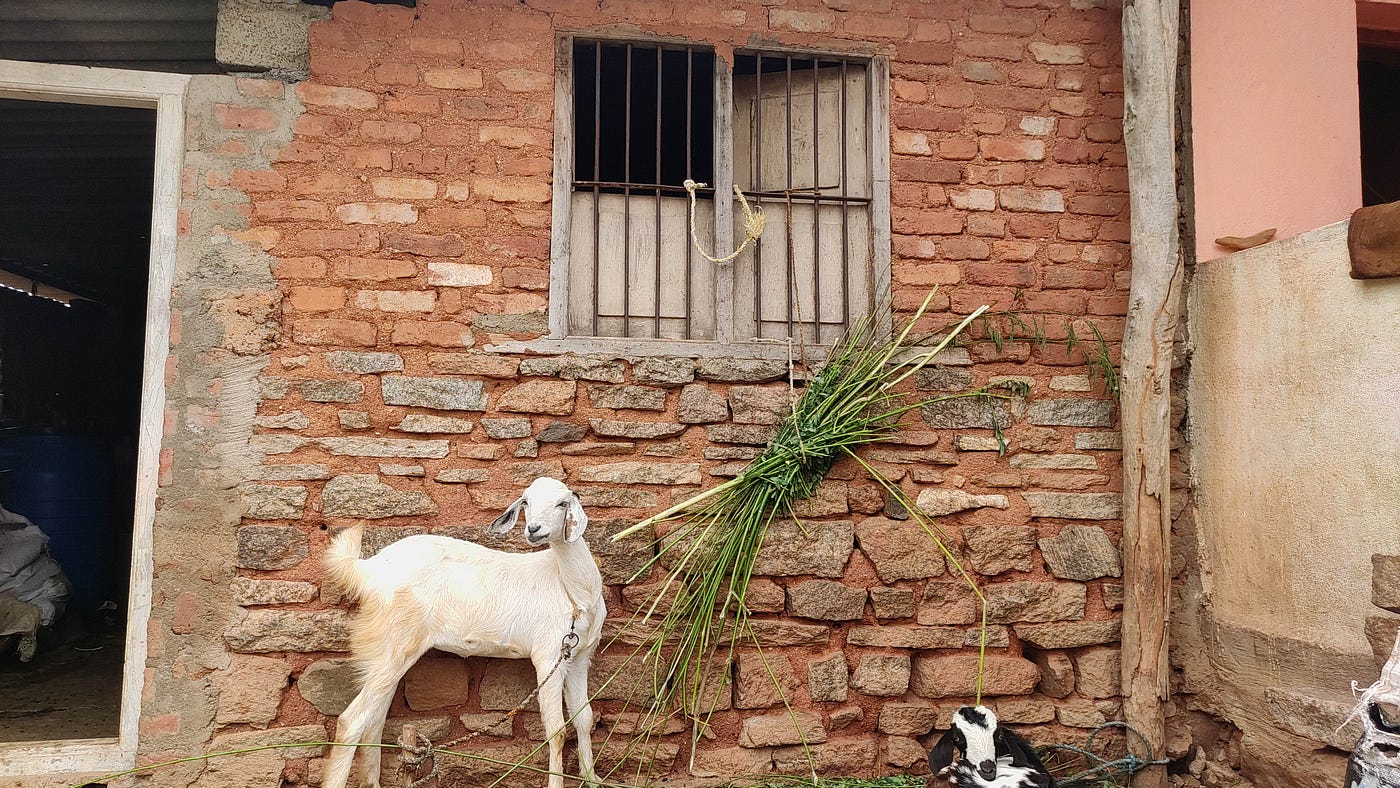
After a few back and forth ideation, we decided to build a community cafe and a cob oven for the community. We also saw this as an opportunity to bring together students and enthusiasts from Tumkur and Bangalore to explore building hands on with earth and other local materials. We were a group of three women architects leading the design build exercise, and called ourselves Chavani.
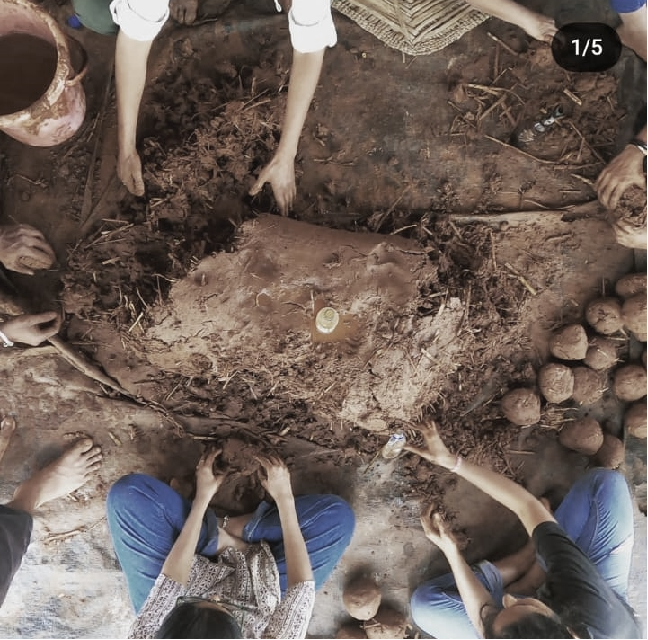
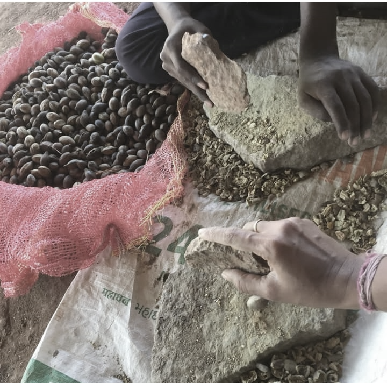
Over the next couple of weeks, we conducted earth building workshops at the space. The village folk also got involved, curious at times and part of the workshop at other times. The whole act of building started feeling like a celebration. One group sieved the soil that was available around, another group was involved in slaking the lime. Some of us cut the husk into shorter strands. Then the ingredients were mixed together just like you would in a baking recipe, water added slowly to the mix. We tested the mix using simple field tests to ensure the soil mix was cohesive enough for the cob wall construction. The ball dropping test was a simple effective test that indicates the sand-silt-gravel mix and suitability.
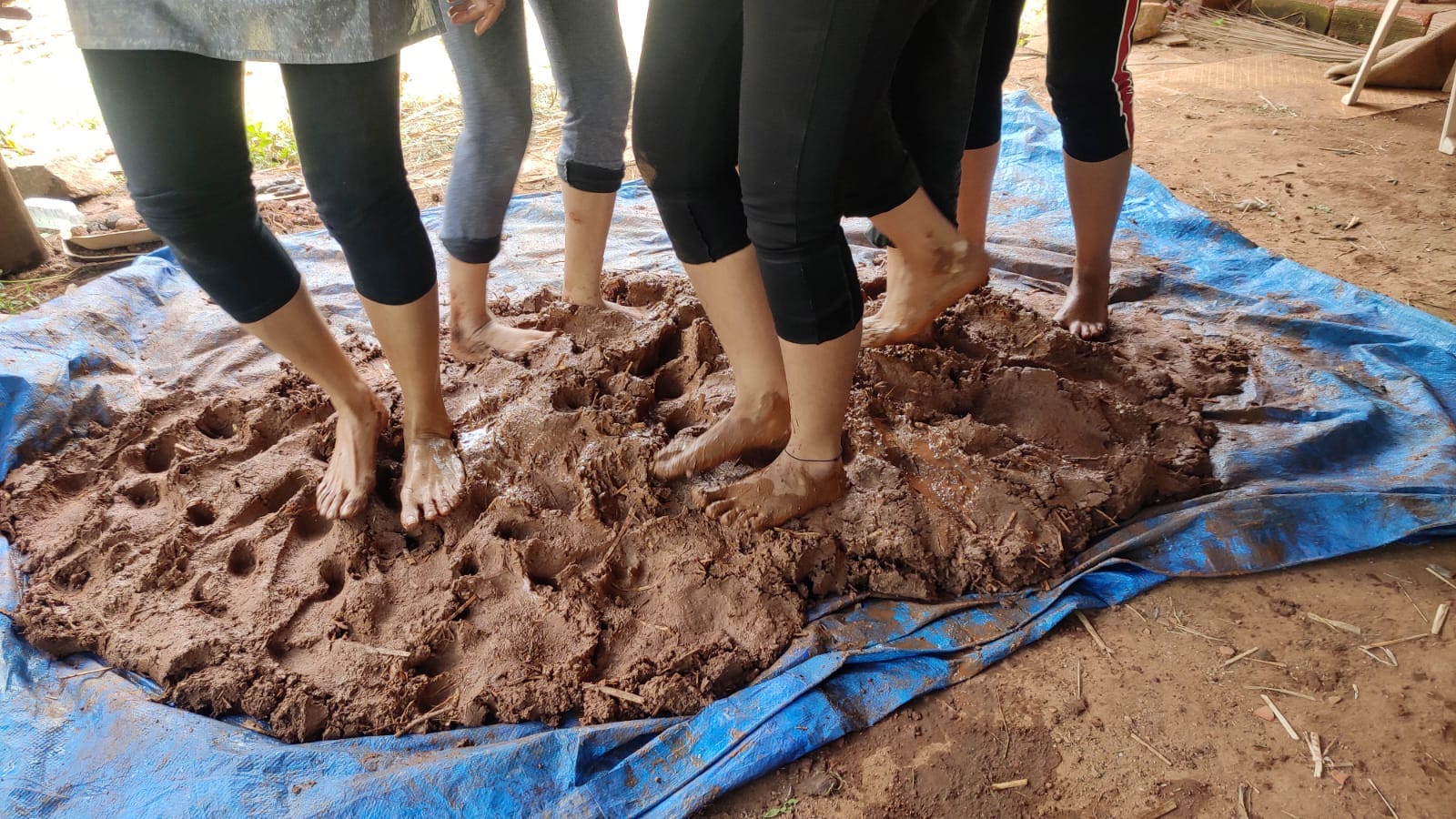
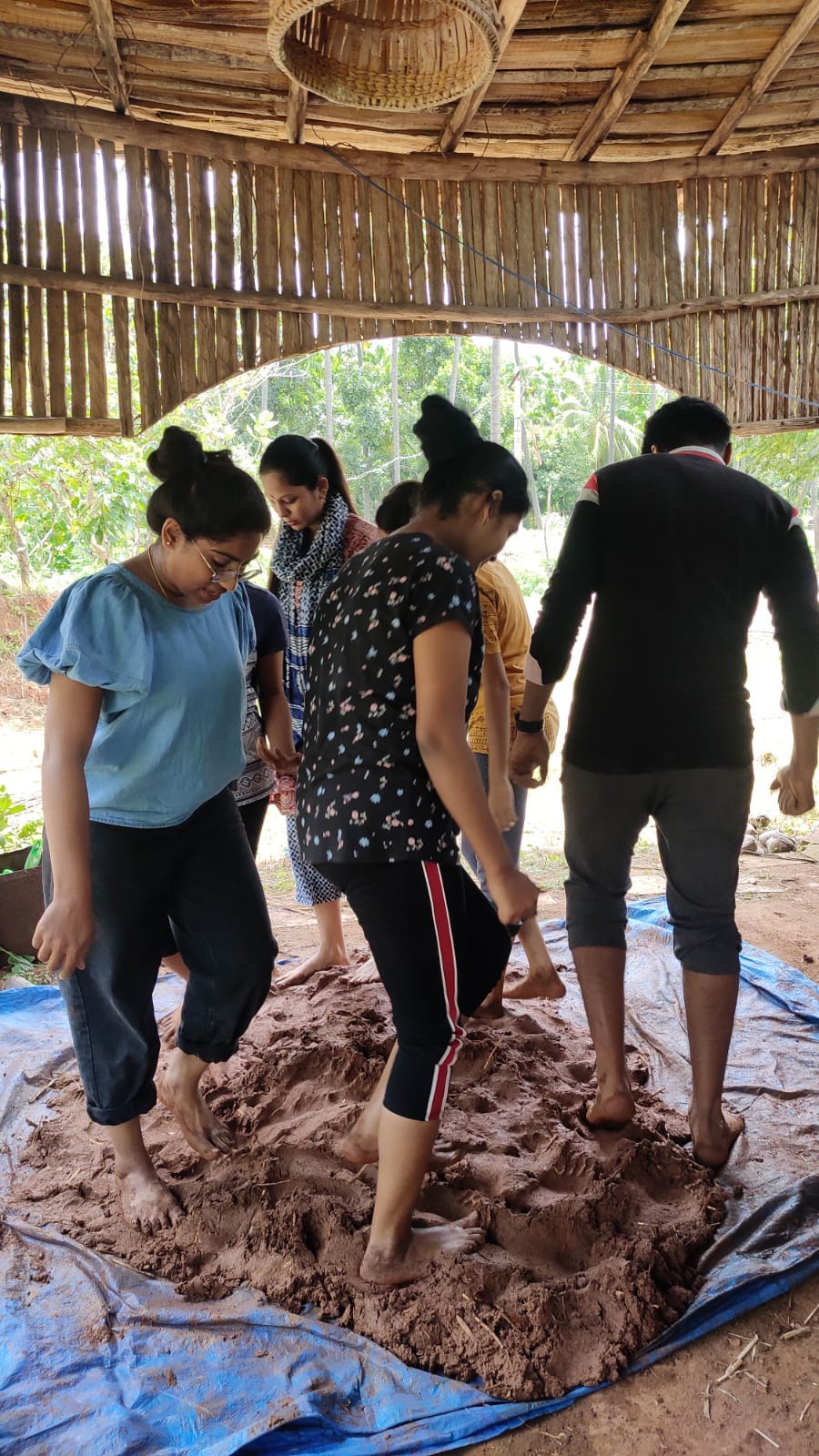
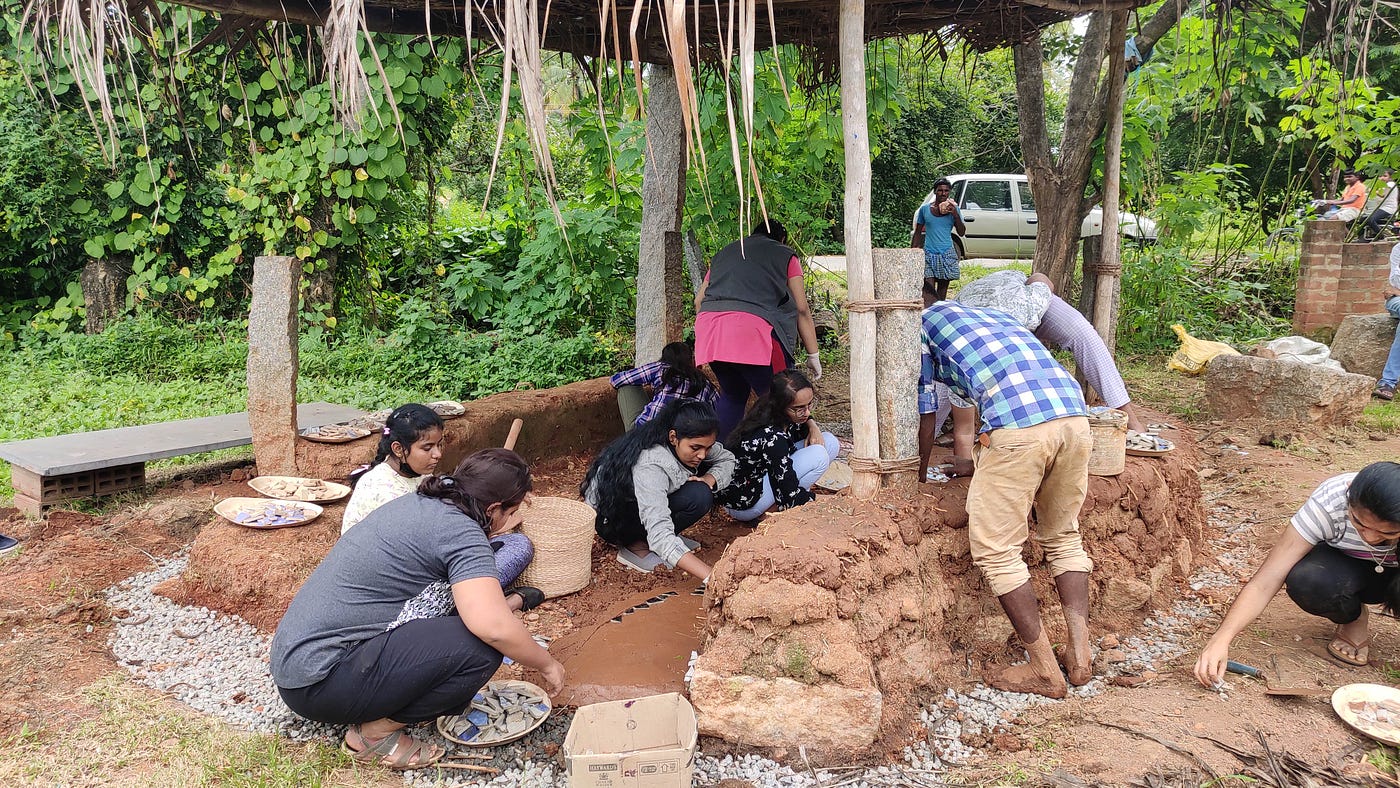
Once the mix quality was approved, the exciting part of the building exercise started. The soil-lime-husk mix was spread on a flat portion of the ground. The mix had to be kneaded well using a process called stomping where all the participants walked over the mix with their bare feet, going in circles and almost dancing. Children and adults enjoyed this part of building. We were taking turns to stomp as it was physically exhausting. Once kneaded, we all sat in a circle around the soil mix and prepared medium sized balls of the soil. A human chain was formed and the balls were shifted to the site of the actual masonry and thrown in position. The balls of mud were thrown one above the other, slowly creating a thick cob wall where none existed before.
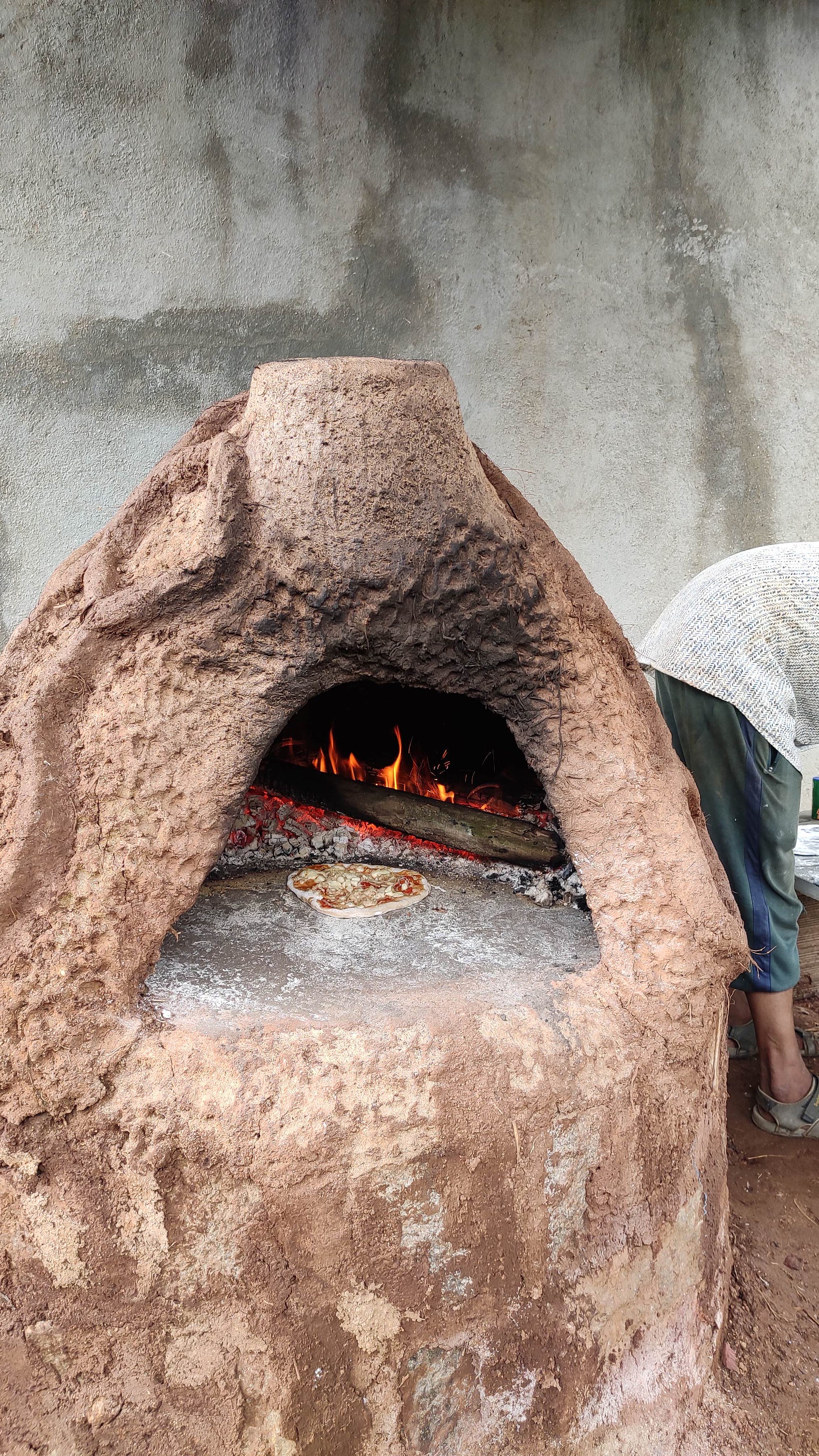
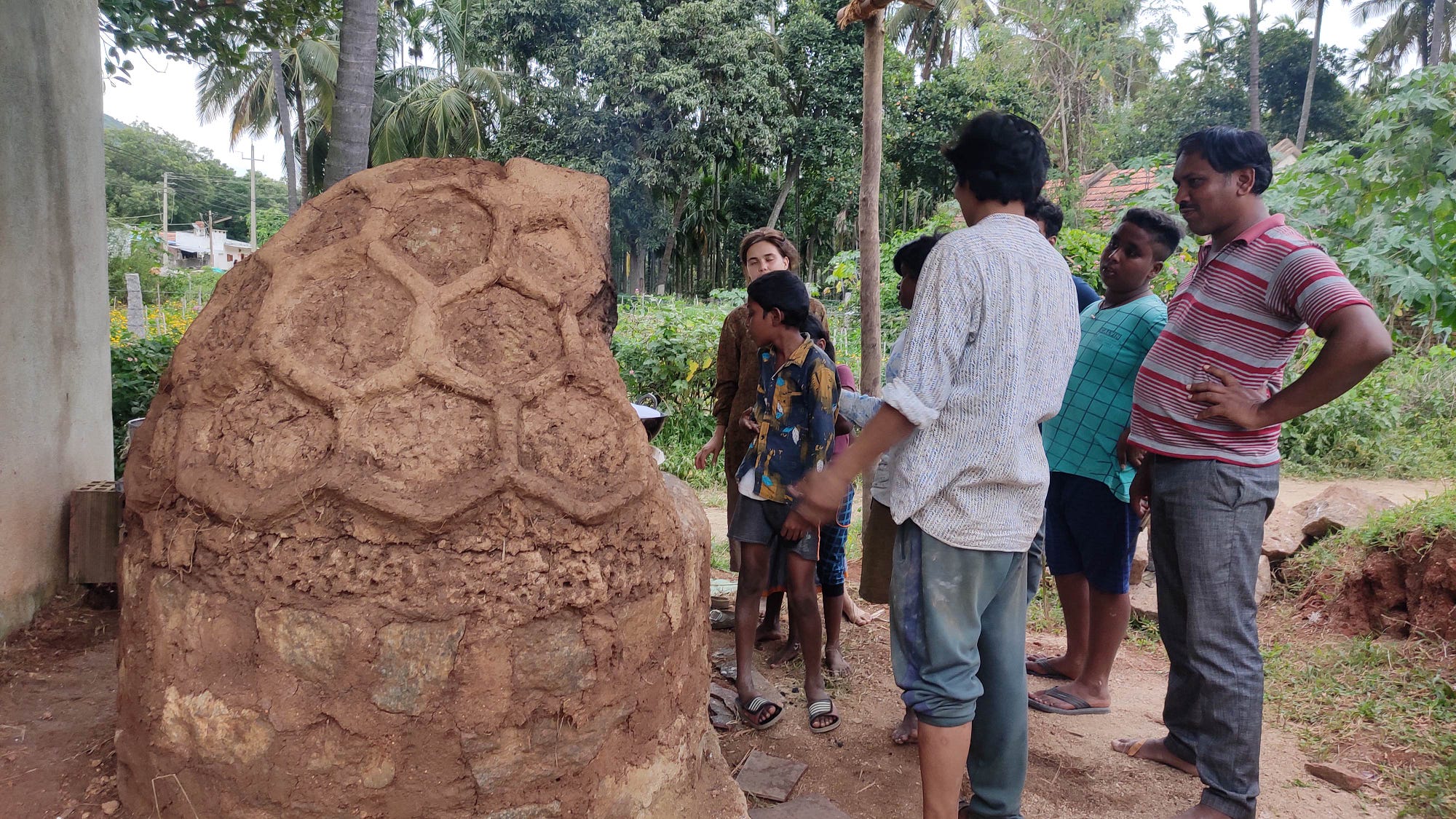
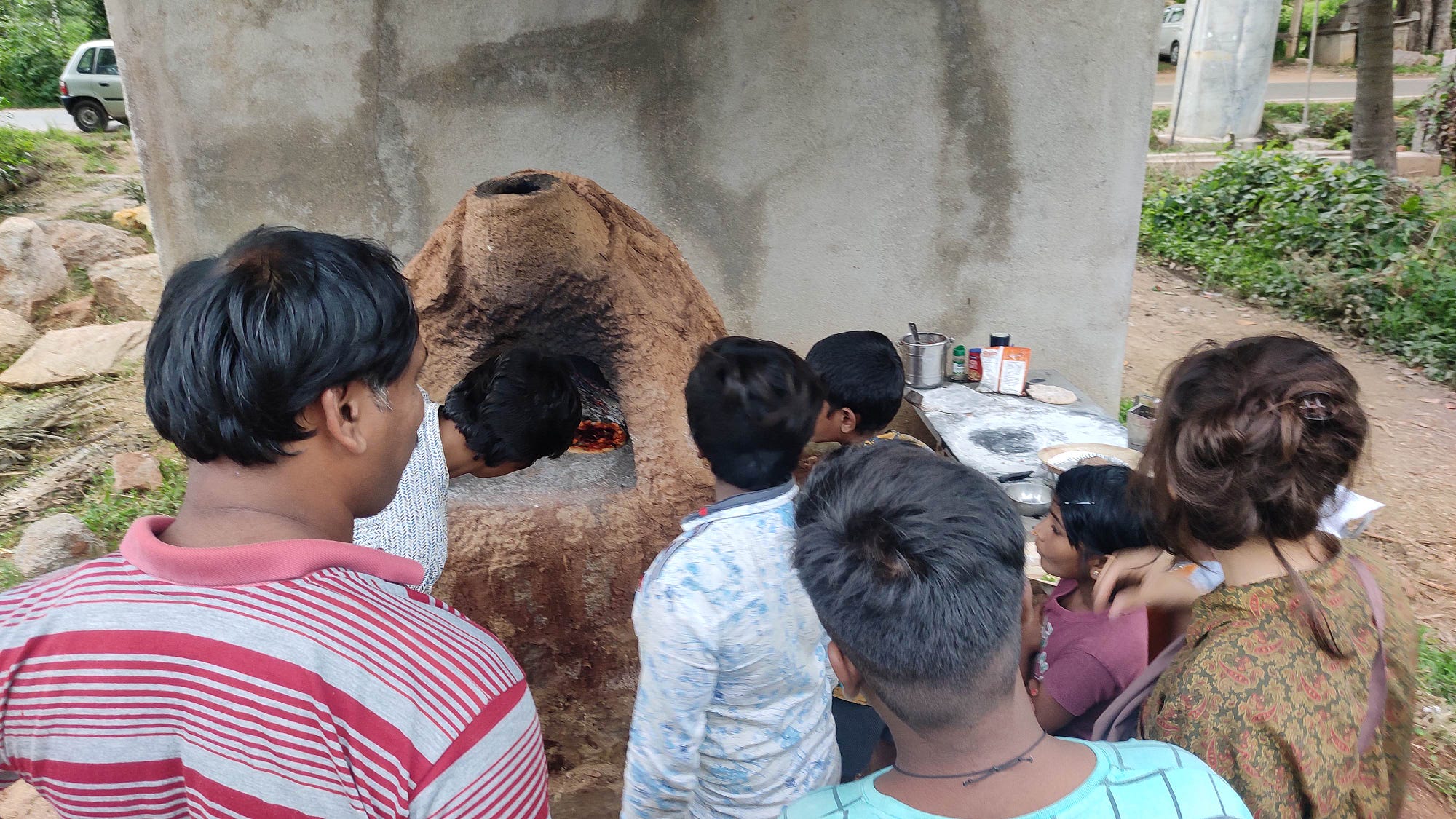
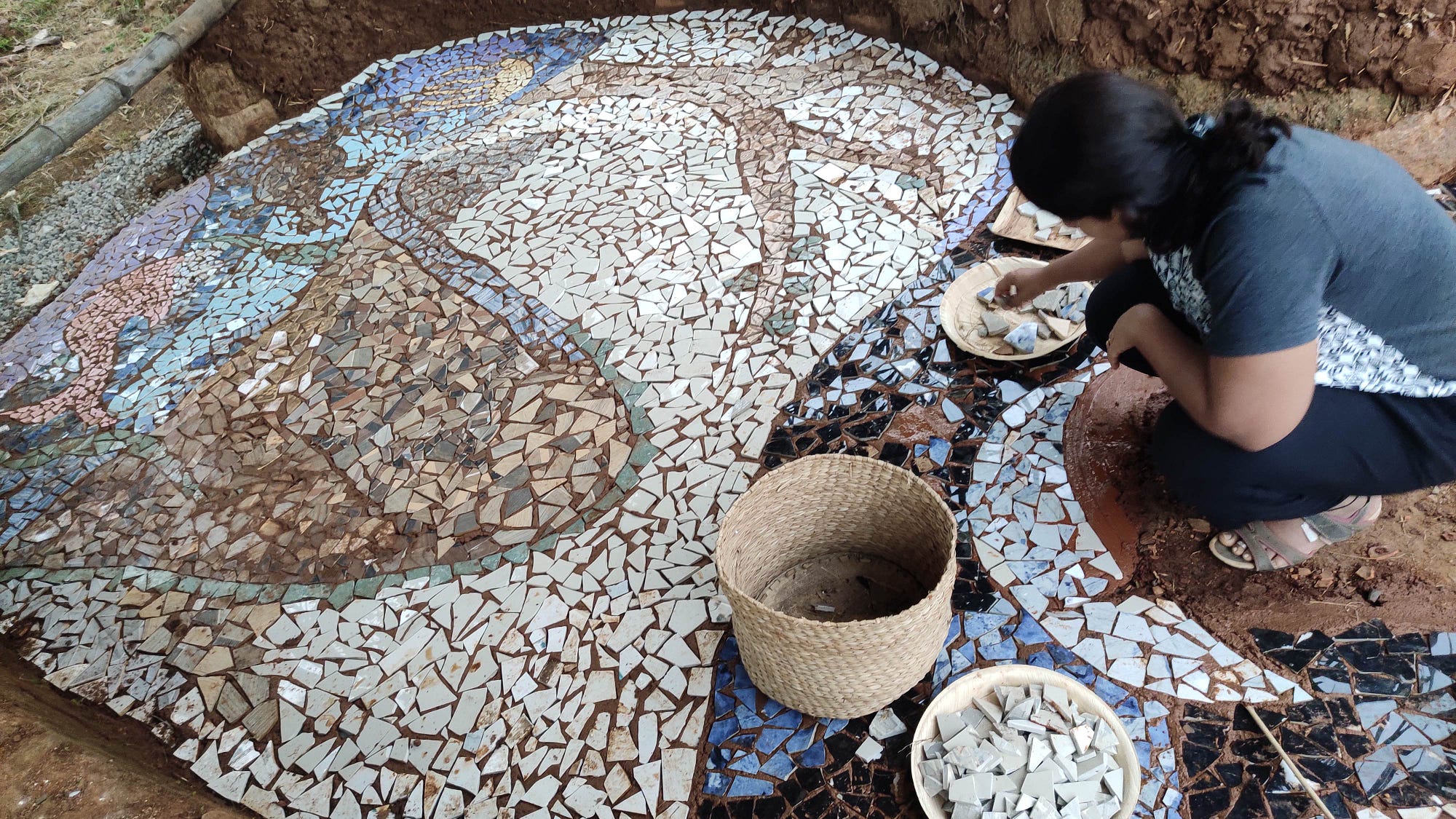
The process was very slow and high effort, it also was a time that felt like therapy and community building. The materials used were all non toxic and allowed us to work with our hands and feet, connecting us to the structure we were building. We explored wattle and daub construction, natural pigments from nature, mud and mosaic flooring during the stint. Subsequently, we built a cob oven from scratch using cob masonry. To achieve the dome shape over the oven, we used sand mix to sculpt a temporary formwork. Over this the cob mix was poured to give the dome shape with a pipe outlet for the chimney. Once the cob dome set, after a period of 20 days, the sand was removed creating the gap for the oven. The space was fired using wood before it became ready to create wood fired ragi pizzas.
Although we do not build extensively with our hands now, those experiences shaped our understanding of material tactility, effort in building and what it really means to build with earth and our own hands.
Working on a home, an interior fit-out or an alternative-construction project? We'd love to hear about it.
Take the Quiz